 5paisa
Key facts
| Regulation | SEBI-regulated domestic discount broker |
|---|---|
| Local licence | SEBI Stock Broker INZ000010231 |
| Max leverage | Intraday per SEBI peak-margin rules |
| Costs | Regular: flat ₹20/order all segments |
| Platforms | 5paisa mobile app, web platform and desktop application |
| Account types | Demat+Trading |
Products and markets
- Forex / CFDs
- Local stocks
- US stocks
- Crypto
- Commodities
Leverage cuts both ways: CFD losses can exceed what you expected to risk.
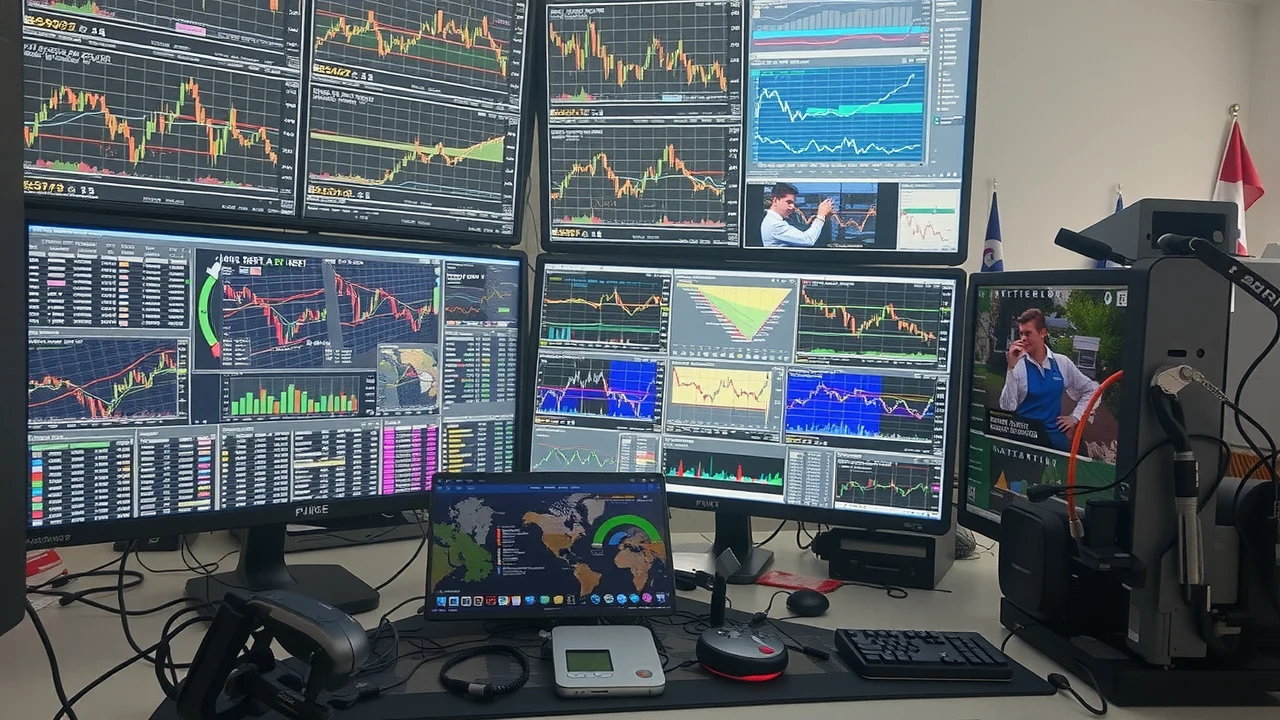
5paisa is a SEBI-regulated domestic discount broker built for Indian exchange-traded markets, not for offshore spot forex or CFD trading. Its licence (SEBI Stock Broker INZ000010231) covers NSE, BSE and MCX membership, and it settles client money in INR through UPI and net-banking. If your strategy lives inside Indian equities, F&O or INR currency derivatives, this is a broker worth understanding properly. If your strategy needs 100x offshore leverage on GBP/USD, 5paisa is not the instrument you are looking for.
The distinction matters more here than in most markets, because India's retail landscape splits cleanly in two. One channel is exchange-linked and heavily supervised; the other is offshore and outside the permitted framework. We will look at where 5paisa sits, what it actually costs, and which trading styles it genuinely serves.
Where 5paisa Sits in the Market
5paisa Capital Ltd is a Mumbai-based discount broker that was demerged from the IIFL group and listed publicly. Founded in 2016, it operates on the classic discount model: low flat brokerage, no research hand-holding, digital onboarding. Its regulatory standing is domestic and specific.
| Item | Detail |
|---|---|
| Regulator | SEBI (Stock Broker INZ000010231) |
| Exchange membership | NSE, BSE, MCX |
| Depository | CDSL DP |
| Base currency | INR |
| Year founded | 2016 |
| Corporate origin | Demerged from IIFL, publicly listed |
Practically, this means your account sits inside the Indian supervisory perimeter. The RBI governs foreign exchange under FEMA 1999, and only INR-based pairs (USD/INR, EUR/INR, GBP/INR, JPY/INR) plus permitted cross-currency derivatives trade on SEBI-recognised exchanges. 5paisa's currency segment serves that channel, nothing wider.
Costs and the Subscription Model
The headline is a flat ₹20 per order across all segments on the Regular plan, with no minimum funding requirement and instant UPI funding. The real cost question is whether a subscription beats flat pricing, and that depends entirely on your order count.
| Plan | Monthly Fee | Per-Order Cost | Delivery |
|---|---|---|---|
| Regular | ₹0 | ₹20 flat | Charged per order |
| Power Investor | ₹599/mo | ₹10/order | Charged |
| Ultra Trader | ₹1199/mo | ₹10/order | Free |
Annual maintenance sits at ₹300 per year (₹75 quarterly, ₹0 under BSDA). Account opening is low or free depending on the running offer. Ultra Trader makes delivery free, which changes the arithmetic for anyone holding positions rather than churning them.
The break-even logic is straightforward. On the Regular plan, 100 orders a month cost ₹2,000 in brokerage. On Power Investor, the same 100 orders cost ₹1,000 plus the ₹599 fee, for ₹1,599 total. The subscription wins at volume, and loses badly for a trader placing 20 orders a month. Run your own order count before subscribing.
Fit for Scalping and Intraday
This is where the discount model shows both its strengths and its ceiling.
Intraday leverage follows SEBI peak-margin rules, so the multiples are set by regulation rather than by the broker's marketing. We did not verify exact intraday multiples at review, because they shift with exchange margin circulars and the specific instrument. What we can say is that the structure is margin-based and transparent, which is the opposite of the offshore channel that advertises 100x to 1000x to Indian residents.
For scalping on liquid NSE instruments, the flat per-order cost is predictable, which suits high-frequency styles better than a percentage-based model. The platform stack, the 5paisa mobile app, web platform and desktop application, covers the basics. Execution speed and slippage on fast markets depend on your connection and the exchange's own matching, and we would not treat any discount broker's app as a low-latency institutional terminal.
The honest constraint is tooling. If your scalping approach depends on custom indicators, tick-level backtesting or API-driven automation, check whether the desktop application supports what you need before committing. Discount brokers optimise for order placement and cost, not for algorithmic edge.
| Trading Style | Suitability | Note |
|---|---|---|
| Equity intraday | Good | Flat ₹20 suits frequent orders |
| Delivery investing | Good | Ultra Trader makes delivery free |
| F&O positional | Workable | Margin per SEBI rules |
| INR currency futures | Workable | Exchange-traded pairs only |
| High-frequency automation | Check first | Confirm API and tooling |
| Offshore spot forex/CFD | Not applicable | Outside permitted framework |
The Honest Downsides
No review is useful without the friction points, and 5paisa has a few that are worth stating plainly.
Support quality is the most commonly raised issue. There are user complaints about support responsiveness, and while we did not verify major SEBI action against the firm, the day-to-day experience of getting a query resolved is a genuine variable. Test it during your account-opening window, when a slow ticket costs you almost nothing.
Second, the model removes hand-holding by design. There is no relationship manager walking you through positions. If you are moving from a full-service broker and expect advisory, this is a deliberate trade-off, not a defect.
Third, the product menu is deep but domestic. Equity delivery and intraday, F&O, currency, commodity, mutual funds, IPO and insurance are all there. What is absent is the offshore instrument set and swap-free account structure, so traders whose strategy depends on those features will not find them here.
What Changes for a New Trader
The gap between a first-year trader and a ten-year trader shows up in different places with a domestic discount broker.
For a newcomer, the deciding factors are KYC and cost discipline. Opening an exchange-linked account requires a PAN card (mandatory), plus Aadhaar, an address proof typically within three months, and bank proof such as a cancelled cheque. Approval usually lands within 24 to 48 hours. Once you are in, the flat ₹20 structure makes losses visible fast, which is a healthy thing early on. The ₹0 or low account opening removes most of the entry friction.
For an experienced trader, the calculus shifts to execution and tax treatment. Exchange-traded currency futures and options profits are generally treated as non-speculative business income and taxed at your slab rate, while intraday speculative positions follow a different rule: speculative losses set off only against speculative income with a four-year carry-forward, versus eight years for non-speculative losses. That distinction can matter more to your net return than a ₹10 difference in brokerage.
The other lever is the subscription tier. An experienced trader running a high order count should model Power Investor against Regular using their last three months of actual trades, not an estimate. Traders who cross the 20% TCS threshold on LRS remittances above ₹10 lakh per financial year should also remember the tax is a credit, not a cost, and needs accounting for at filing time.
| Trader Profile | First Priority | Why |
|---|---|---|
| New to markets | Complete KYC, test support | Onboarding and service matter most |
| Low-frequency investor | Stay on Regular plan | Subscription won't pay off |
| Active intraday trader | Model Power Investor | Break-even near 60 orders/mo |
| Delivery-heavy holder | Consider Ultra Trader | Free delivery changes the math |
| Automation-focused | Verify API and tooling | Discount apps aren't terminals |
Who It Works For
The verdict depends less on 5paisa's quality and more on whether your strategy fits the domestic exchange framework.
Worth it for: Indian residents trading equities, F&O, commodities and INR currency derivatives on NSE, BSE or MCX who want a low, predictable cost per order and are comfortable with a self-directed model. The flat ₹20 pricing, instant UPI funding and no minimum deposit make it easy to start small and scale. Traders who do their own research and value cost transparency over advisory will find the structure logical.
Not worth it for: traders whose strategy depends on offshore spot forex, CFD exposure, very high advertised leverage or swap-free accounts. Those features are not available through this channel, and for Indian residents they fall outside the permitted framework regardless of which offshore brand offers them. Traders in that position should compare international brokers on regulatory strength, client fund segregation, fee transparency and track record, while remaining clear that margin forex is not a permitted LRS end-use. Check each candidate against SEBI and RBI registers before anything else.
Where they differ
| Feature | 5paisaOur pick | FxPro |
|---|---|---|
| Regulation | SEBI-regulated domestic discount broker | Unregulated locally |
| Local licence | SEBI Stock Broker INZ000010231 | No local Indian licence |
| Max leverage | Intraday per SEBI peak-margin rules | Up to 1:200 |
| Platforms | 5paisa mobile app, web platform and desktop application | MT4, MT5, cTrader, FxPro Edge |
| Account types | Demat+Trading | Standard, Raw+, cTrader, Elite, VIP |
5paisa Capital Limited sits in a lower regulatory tier than a fully regulated top-tier broker because it is overseen by SEBI and a depository participant regime, not by a top-tier framework that typically adds stronger investor-compensation coverage and tighter cross-border safeguards; client money is segregated under local rules, but there is no comparable top-tier compensation scheme that would cover a broker failure in the same way. Practically, that means a trader gives up the stronger fallback protection, broader dispute-remedy structure, and higher reassurance that deposited cash and securities receive under a top-tier regulator’s investor-protection model.
Pros
Cons


Questions worth answering
Is 5paisa available to traders in India?
Yes. 5paisa Capital Ltd is a SEBI-regulated domestic discount broker operating from Mumbai, with Stock Broker licence INZ000010231, NSE, BSE and MCX membership, and CDSL depository services. Accounts are opened in INR and funded through UPI and net-banking.
Is 5paisa legally allowed to offer offshore forex trading?
No, and it does not claim to. Its SEBI licence covers exchange-traded products. RBI and FEMA permit Indian residents to trade only INR-based pairs such as USD/INR, EUR/INR, GBP/INR and JPY/INR, plus permitted cross-currency derivatives on SEBI-recognised exchanges. Spot forex and CFDs with offshore brokers sit outside that framework.
How do I check whether a broker is legitimate before depositing?
Verify the entity against the SEBI register and the RBI's Alert List of unauthorised forex platforms. As of the 19 November 2025 update, that list totalled 95 entities, with Starnet FX, CapPlace, Mirrox, Fusion Markets, Trive, NXG Markets and Nord FX among the most recent additions. The RBI states the list is not exhaustive, so cross-check the SEBI register as well.
What documents do I need to open a 5paisa account?
A PAN card, which is mandatory, plus Aadhaar, an address proof typically dated within the last three months, and bank proof such as a cancelled cheque. Approval generally takes 24 to 48 hours. UPI and net-banking handle funding, with no minimum deposit requirement.
How are gains taxed on 5paisa trades?
Exchange-traded currency futures and options profits are generally treated as non-speculative business income and taxed at your income-tax slab rate. Intraday speculative losses can only be set off against speculative income with a four-year carry-forward, while non-speculative losses carry forward for eight years. The Income Tax Department / CBDT is the authority, and rates are as of this review.